The Onion of Biblical Times
Well, this got dark.
Note: I started this edition of the newsletter thinking I was writing about an amusing thing. But it turns out that when I tugged at the thread, I ended up someplace dark and political, a place where I didn’t really want to go because I typically think of this newsletter as an escape from all that. So I was going to completely scrap this story. But I couldn’t deny that the complicated place I ended up is still interesting. So I’m going to publish it anyway, with one caveat: I’m not going to completely gloss over the heavy part, but I’m not going to go very far into it, either. It’s not my area of expertise, and people with far more knowledge than me surely have better things to say about it than I do.
So let’s talk about The Onion.
Did you ever read the book Our Dumb Century? It’s an incredible book. It contains reproductions of the front page of The Onion going back to 1900, as though the satirical newspaper had been in print since then. So much care is given to each one. The headlines, articles, and graphic design perfectly mirror the style of the time while retaining The Onion’s sense of humor.
For example, there’s this issue from October 22, 1929:

Or this one from January 27, 1986:
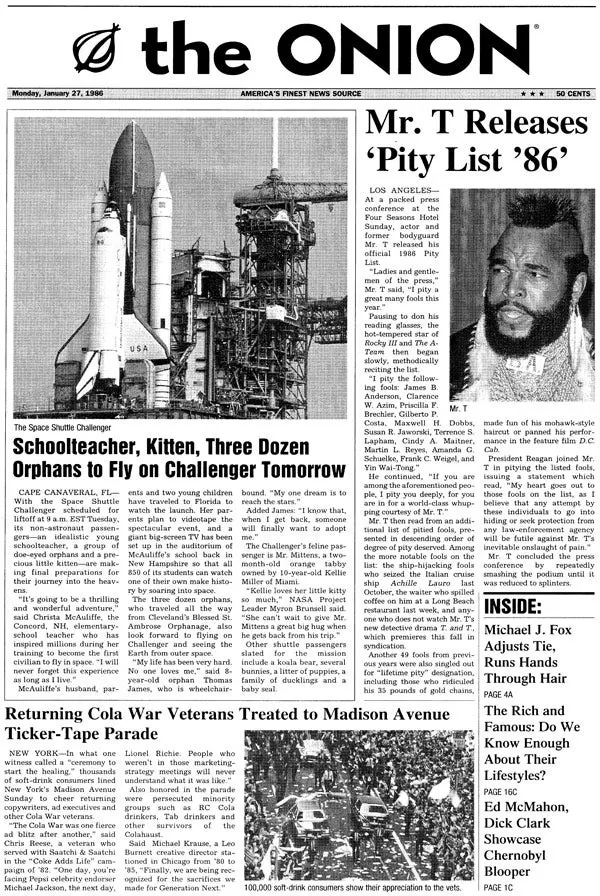
You can see how the fonts and overall look reflect the styles of each one’s era. It’s masterfully done.
In the book Funny Because It’s True, former Onion copy editor Christine Wenc tells the entire history of The Onion. It’s a good read. In the chapter about Our Dumb Century, she describes how it was a huge undertaking that almost got gutted when their publisher, Hyperion, a division of Disney, wanted to remove or change nearly a third of the book that they thought could be offensive to the public or to Disney corporate.
So The Onion backed out of the deal with Hyperion and found a new publisher. Since they actually had a manuscript to show now, and not just an idea, they were able to get three times as much money as they would have with Hyperion. The book became a bestseller. And yet many of the contributors who wrote the articles saw very little of that money, which mostly went back into the business.
I’ve read my copy of Our Dumb Century several times, and each time I find more great details. But it wasn’t until I read Wenc’s book that a memory was triggered of another fake newspaper written in a similar vein that I had seen in my parents’ bookshelf when I was a child. It was called Chronicles, first published in 1954, and it pretended to be a newspaper written in biblical times.
So on a recent visit to my parents’ house, I dug it out. It’s three bound volumes of newspapers printed on real newsprint, the size of a broadsheet. (Do people born in the last 25 years know what a broadsheet its?)
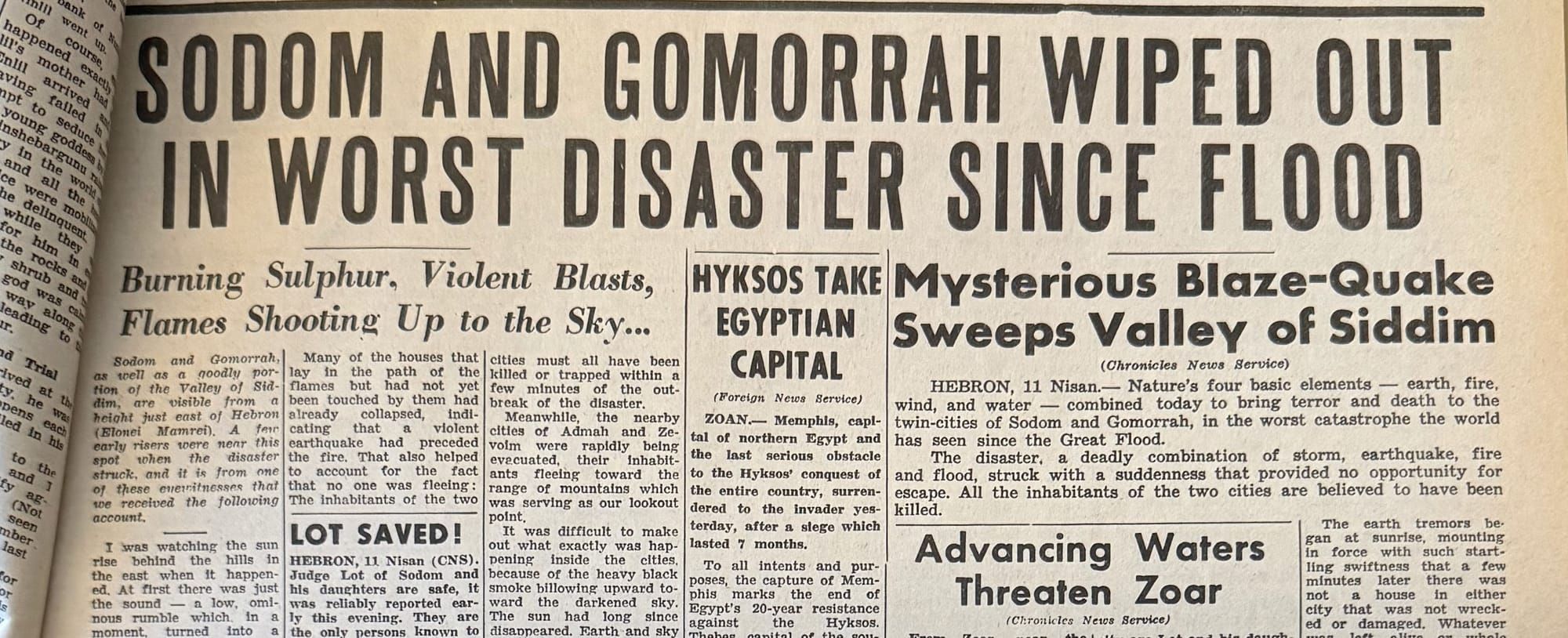
Here are some of the issues. Forgive the bad photos; the strange binding made it difficult to lay flat:
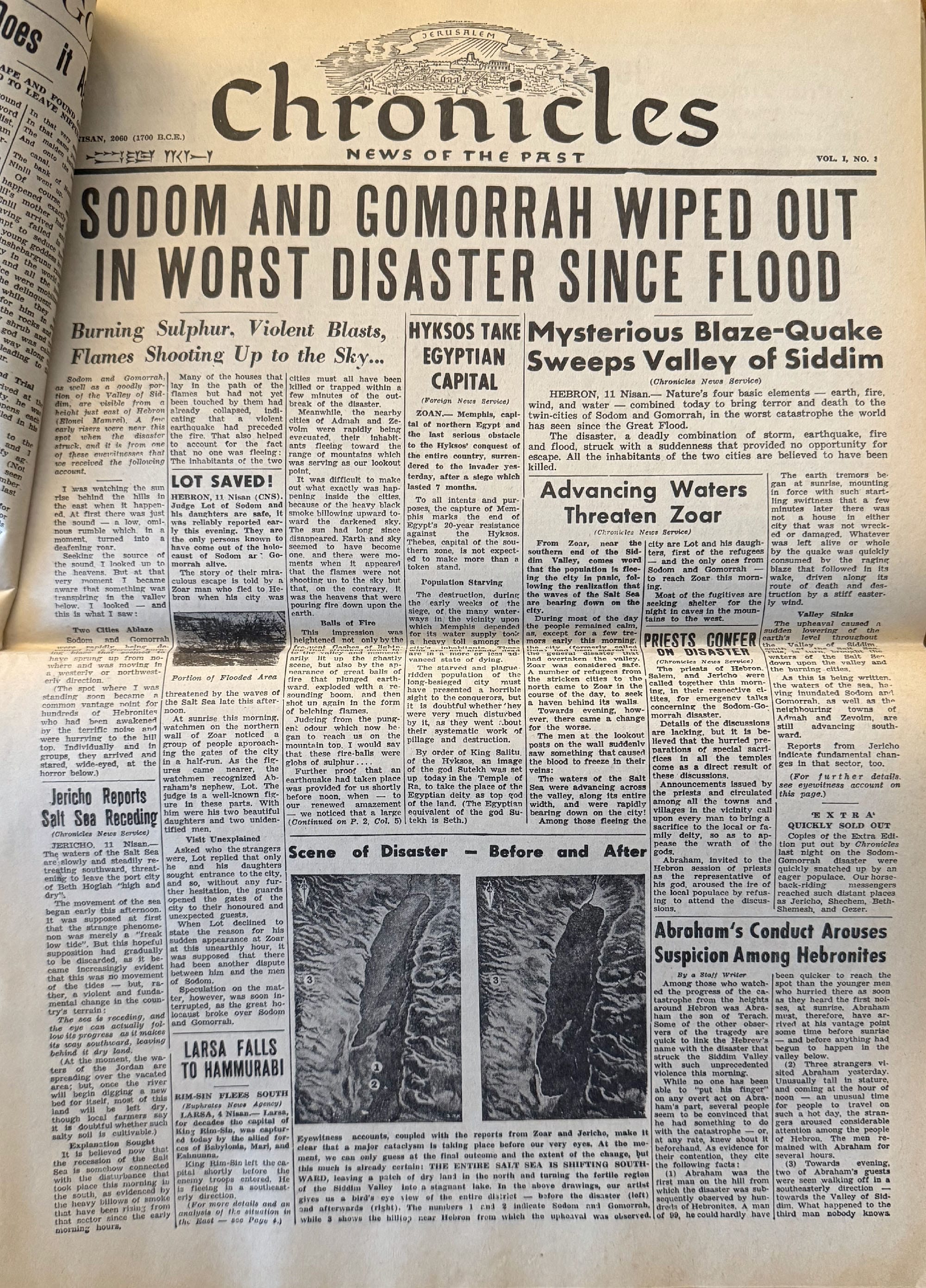
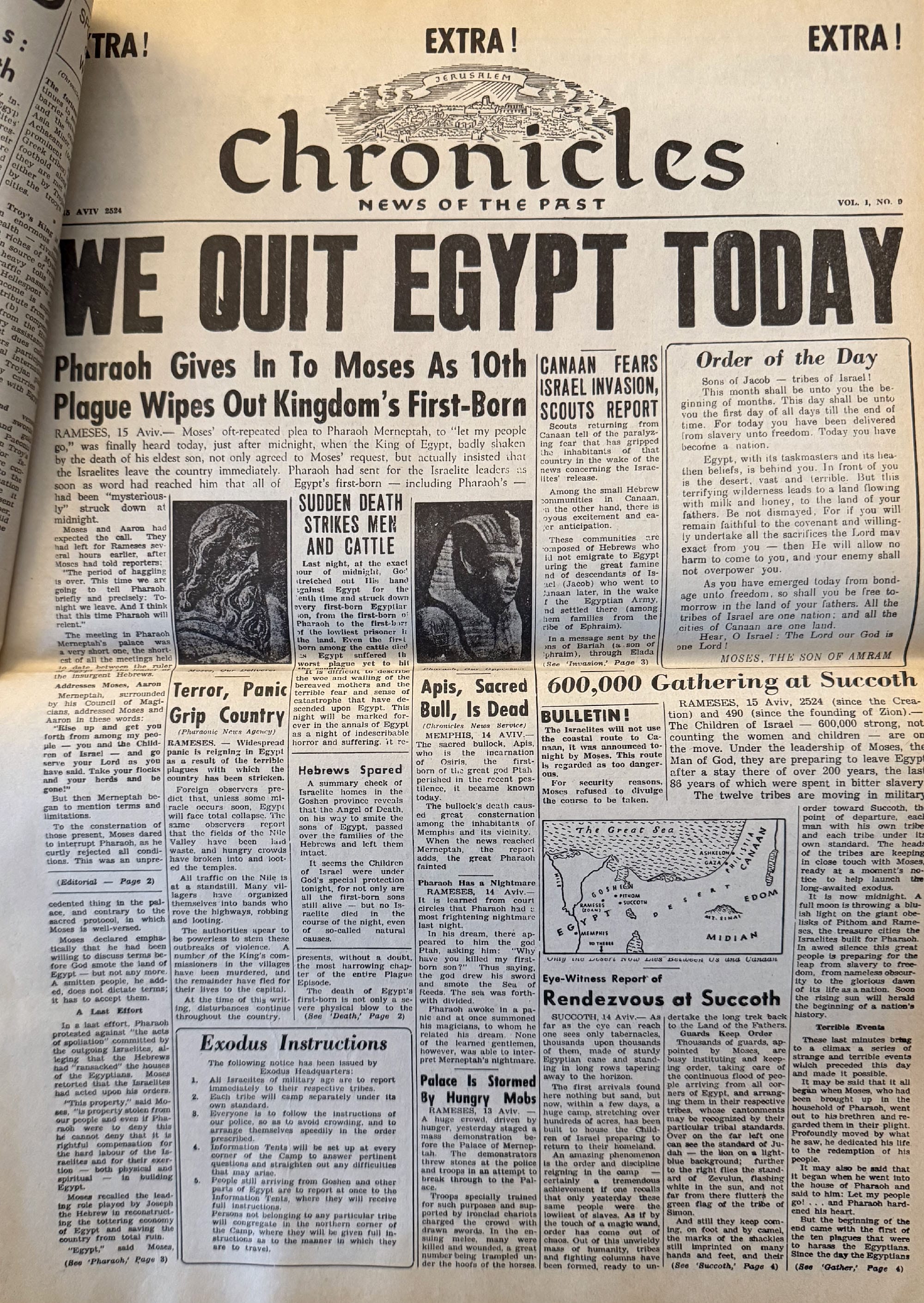
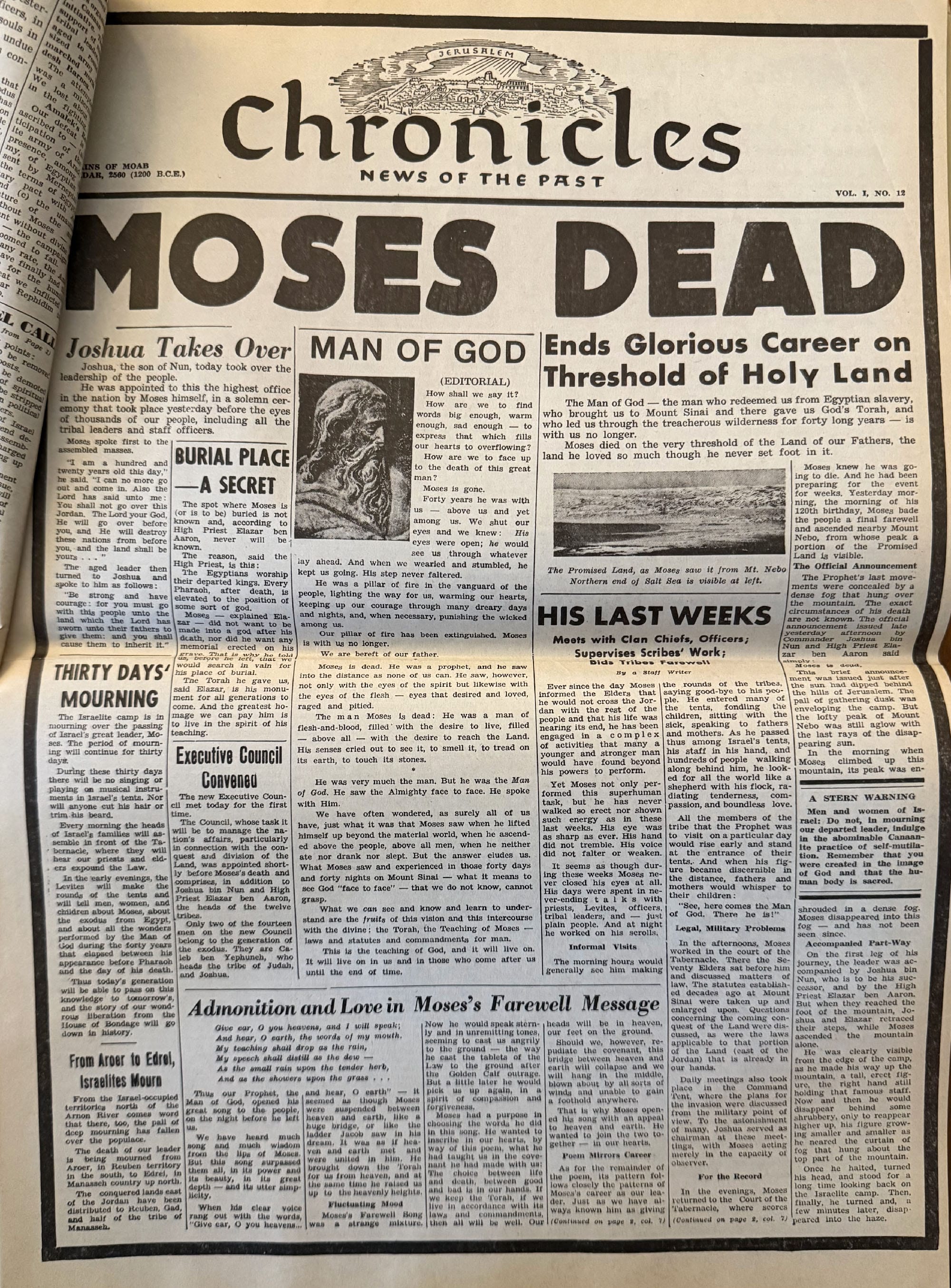
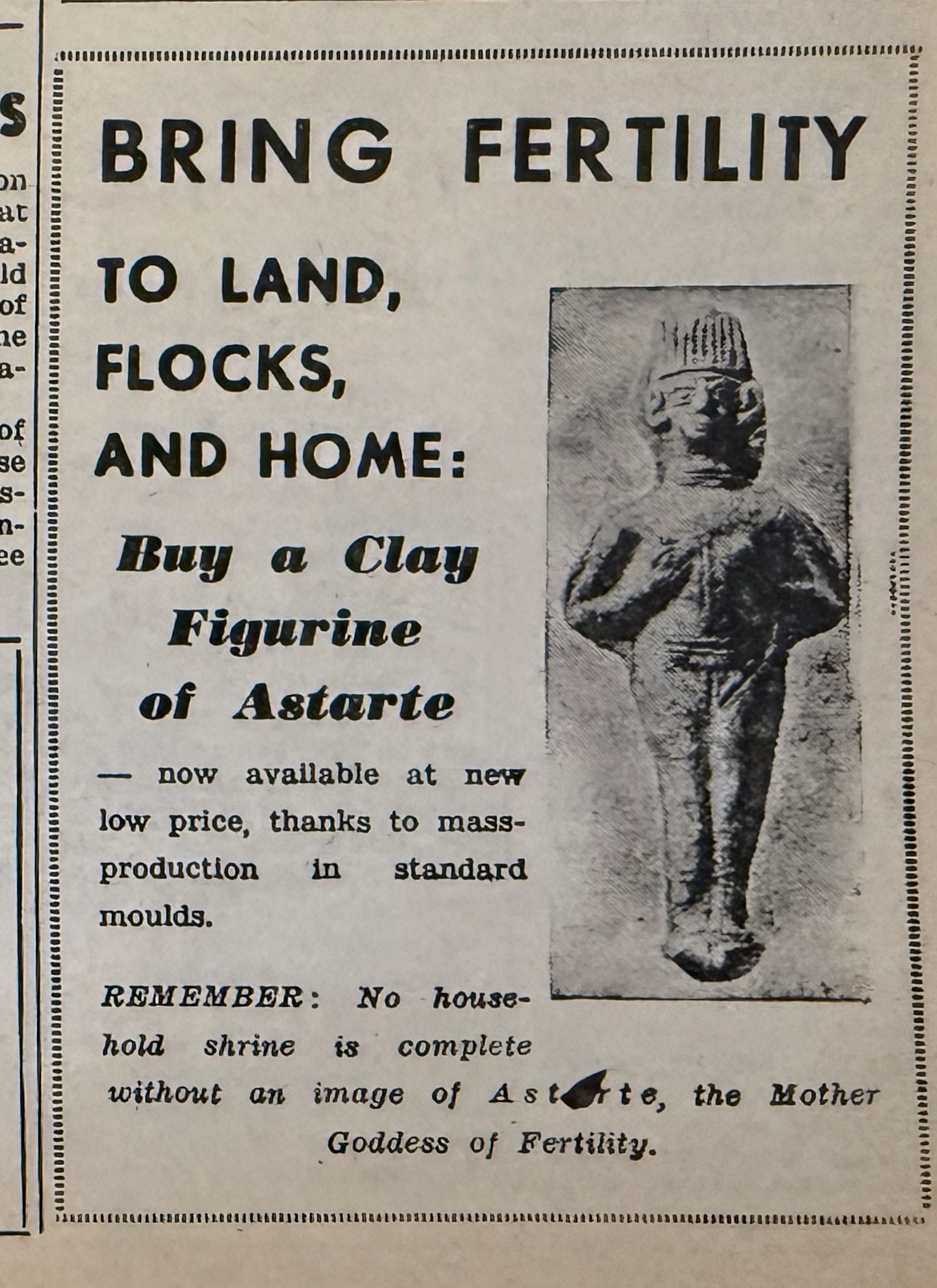
Okay, it’s not exactly funny like The Onion. In fact, I think it’s attempting to be serious. Like, what would the newspaper really look like the day after Sodom and Gomorrah fell? But it has a similar level of sticking-to-the-bit that the Onion book has. It contains fake ads:
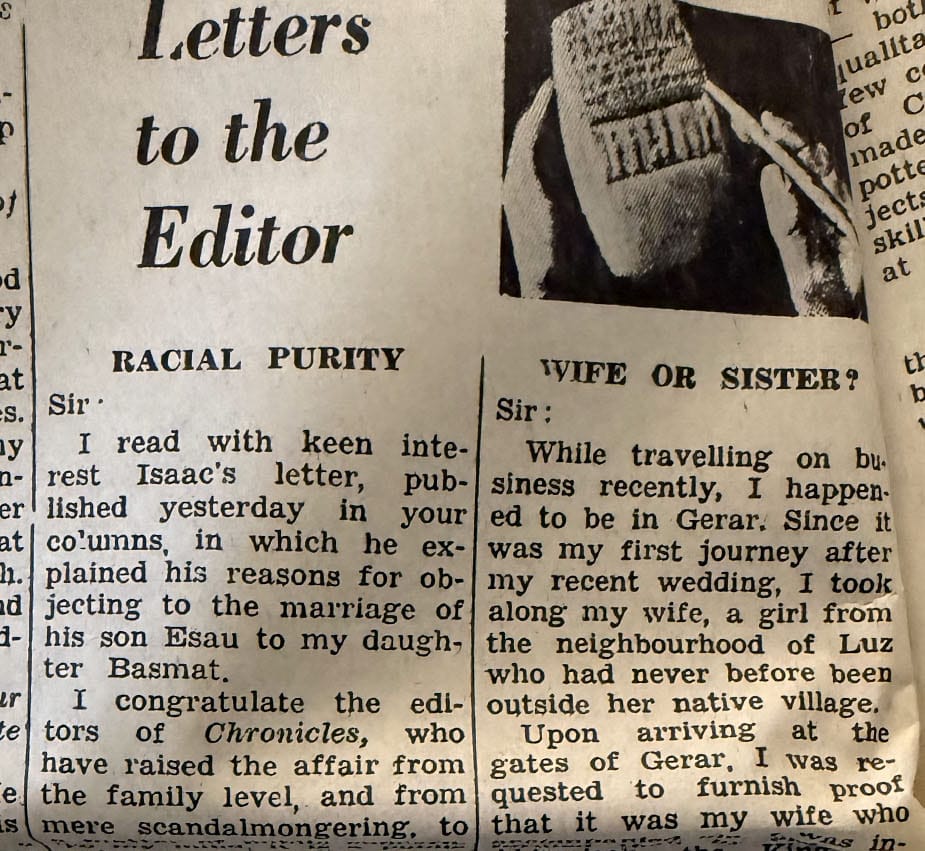
Letters to the editor:
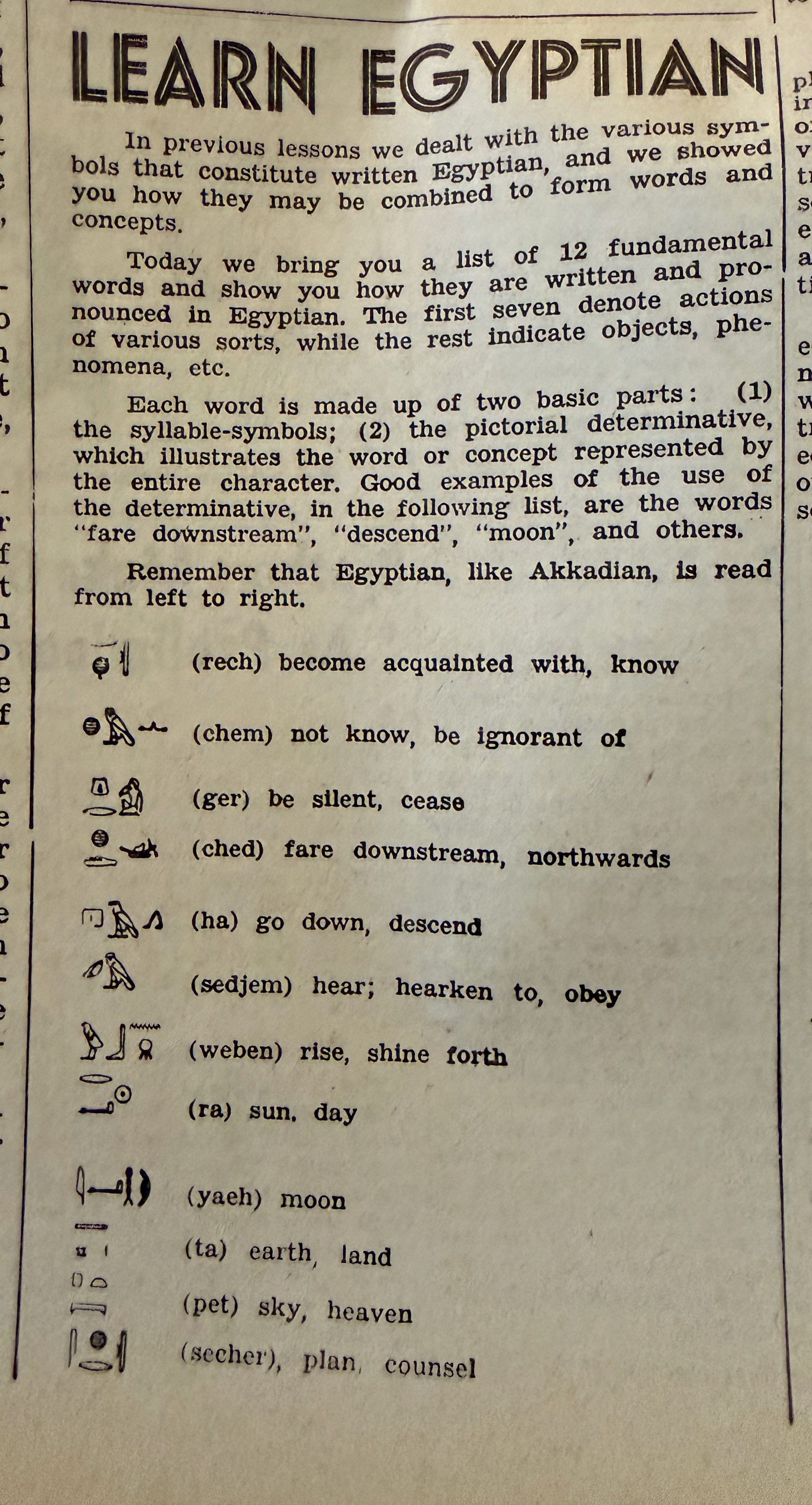
And activities like “Learn Egyptian”:
So I began to wonder: Who made this?
The Designer And The Extremist
I went down a rabbit hole and it led to some strange places. Let’s start with the easy one, the designer of the Chronicles masthead:
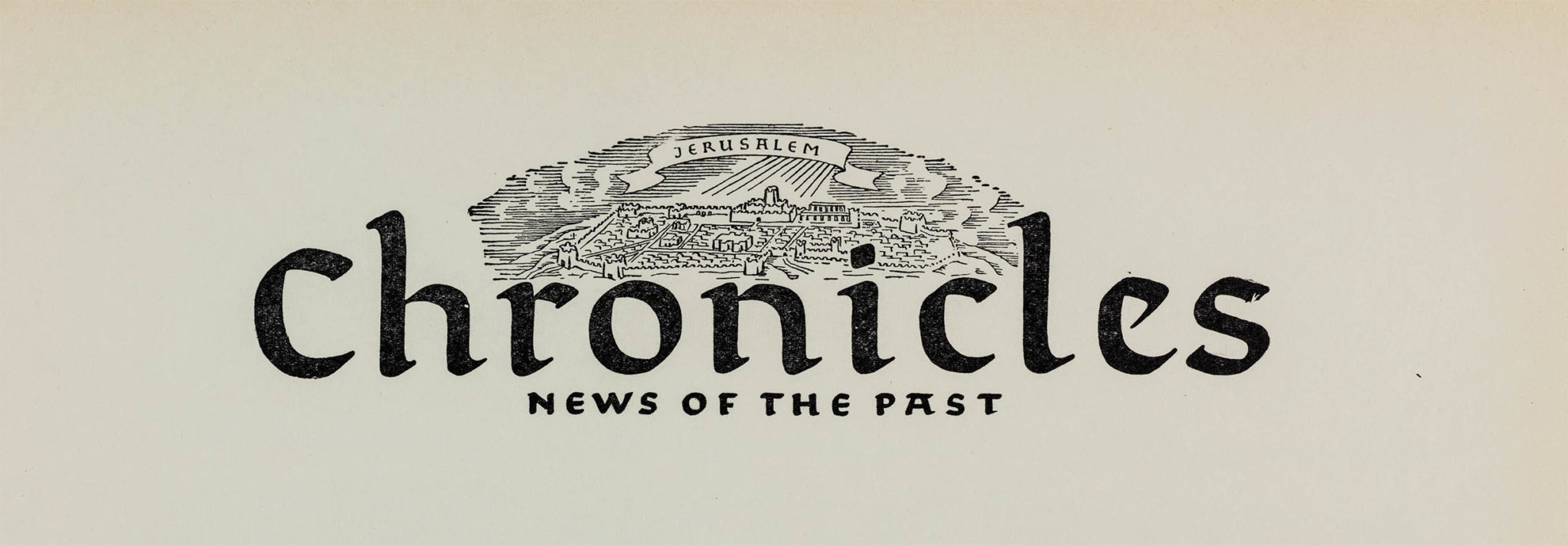
If you saw any sort of Jewish publication in the last 60 years or so of the 20th century, you almost certainly saw the work of graphic designer Ismar David. Here is the description of one of his most significant works, from the intro on his website:
Arguably his most important contribution to the visual arts, and indeed our social fabric as a whole, is his ground-breaking typeface David Hebrew, conceived in the 1930s as a multi-style, multi-weight family of fonts.
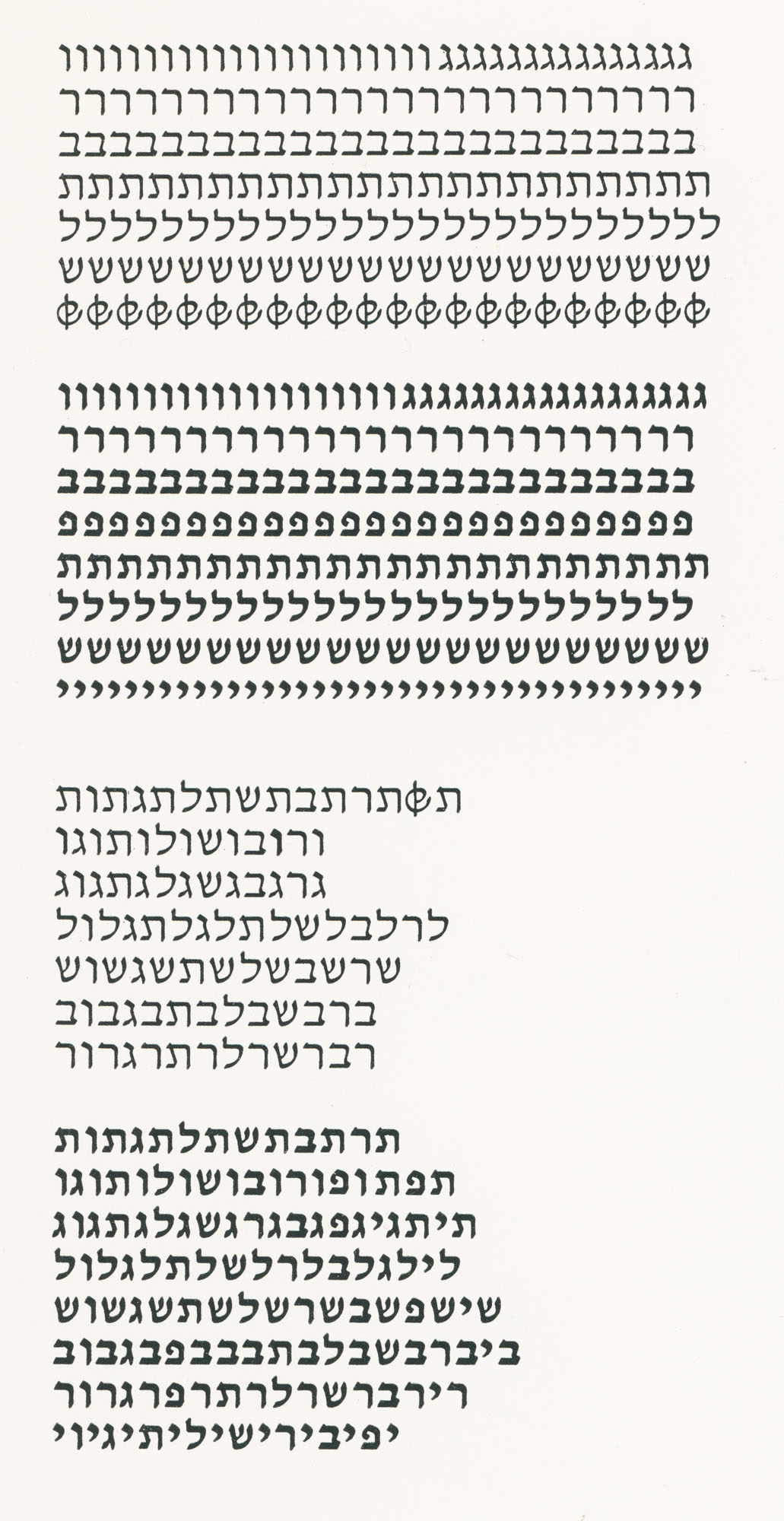
I recognize these letters immediately. I’m sure that when I was a kid I played with dreidels and read Passover haggadahs that have this exact font on them.
And then I looked at more of his design work, like these:
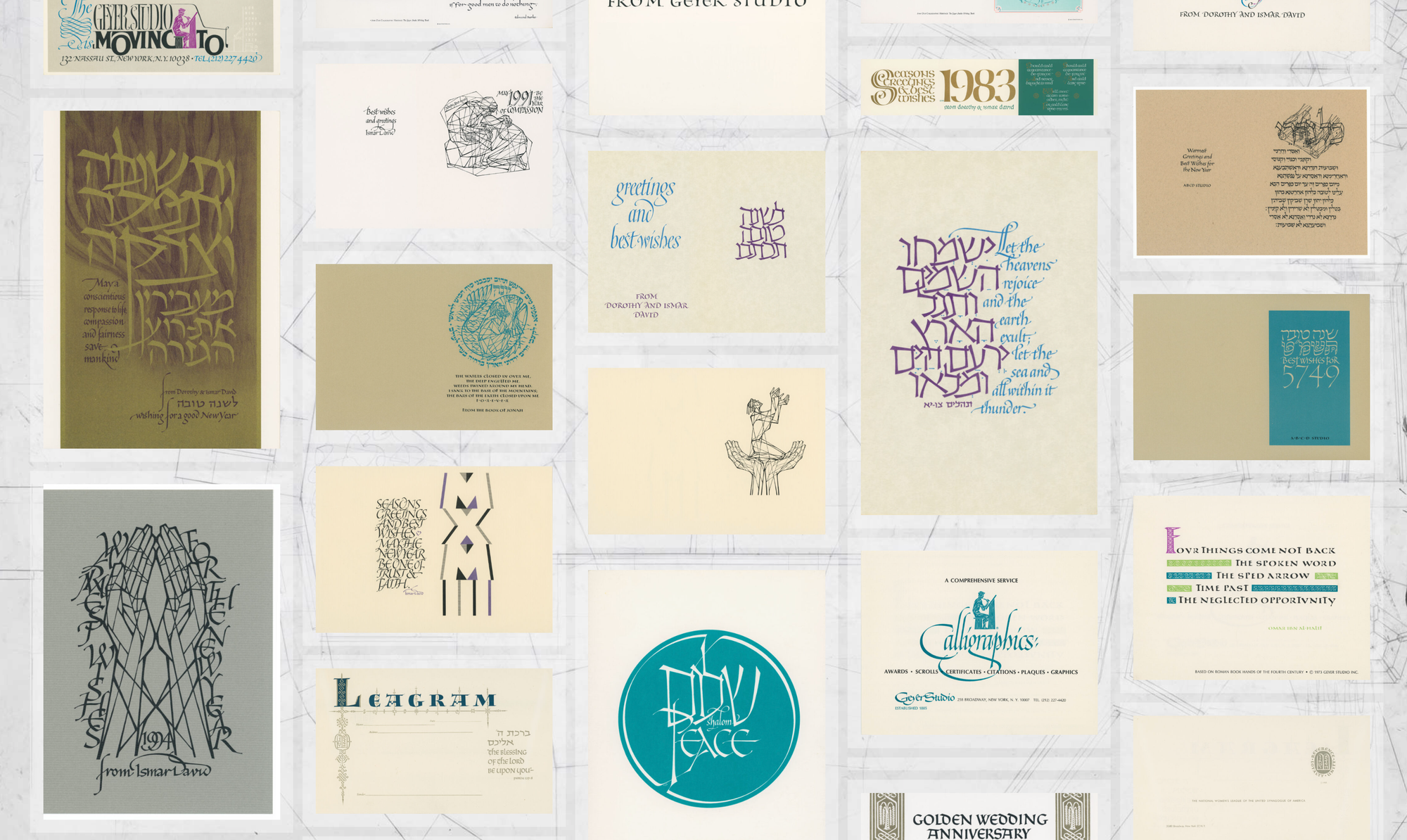
Even if I can’t say specifically that I’ve seen these exact samples (and there are dozens more on his website), I recognize his hebrew calligraphy and art style. I can only imagine how much of his work I was exposed to as a kid when he was still an active designer and I was growing up in a Jewish community.
Now Things Get More Serious
Okay. So that’s a nice little look at the designer. But what about the words? Well, let me tell you just a little of what I learned about the Chronicle’s editor, Israel Eldad.
When he died in 1996, his obituary that ran in the New York Times didn’t mention this fake newspaper at all. It was not what he was most known for. What he was known for was being a member and leader of Lehi, an extreme right-wing militant group that opposed British rule over what is now Israel and the Palestinian territories.
In 1948, during the Arab-Israeli War, he was part of Lehi’s leadership when the group ordered the assassination of United Nations mediator Folke Bernadotte. So of course I looked Bernadotte up, too. Among other things in his career, Bernadotte had negotiated the release of thousands of prisoners from Nazi concentration camps during World War II. But now Lehi saw him as being on the Arab side in Arab-Israeli negotiations.
Then a few years later, Eldad wrote this fake newspaper about the bible.
From what I could tell, Eldad today is neither universally celebrated nor universally condemned, even among people who share broadly similar political views on Middle East politics.

This whole thing has gotten far too serious for this newsletter. Middle East politics is not in the scope of Ironic Sans. I just wanted to talk about funny newspapers. I normally would follow a thread anywhere it takes me, but this one just keeps getting darker and darker the more I pull. So I’m just going to leave it there.
Some of you might want to learn more, from either a historical perspective, or perhaps you’re interested in how all this relates to current Middle East politics. You’re welcome to tug that thread more on your own. And we can talk about it somewhere else if you’d like. But not here.
Thanks as always for reading. See you next time.
David